What Countertops Round Rock Companies Install Most Often
On
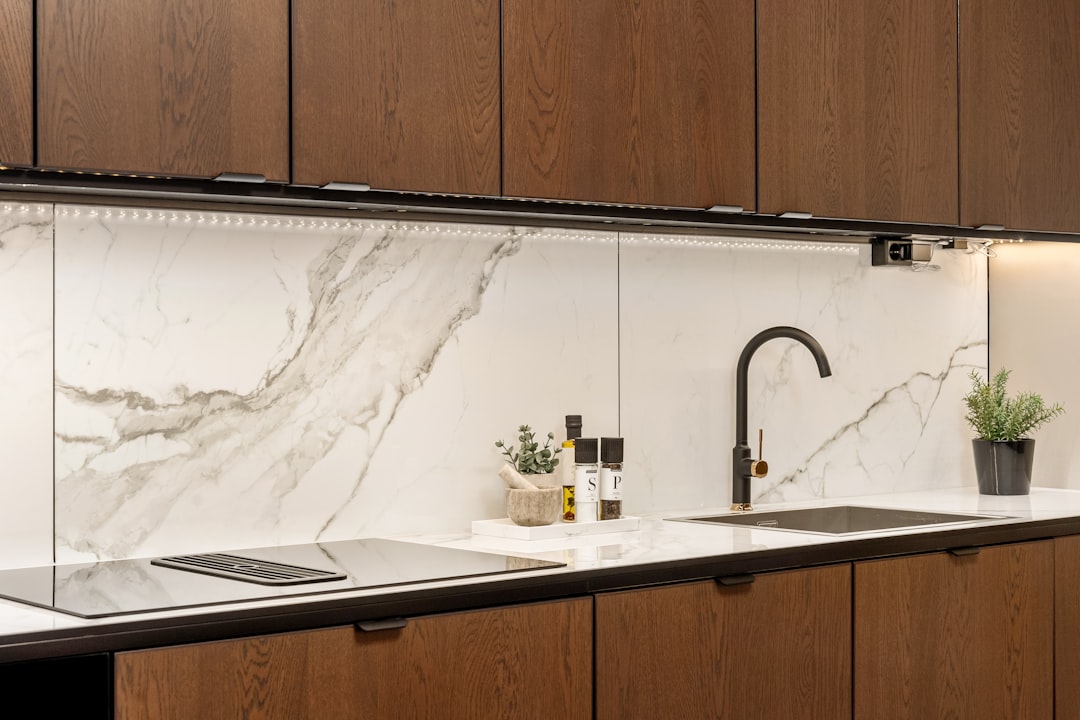
After enough kitchens in this area you stop being surprised by what people pick. The countertops Round Rock companies install most often come down to a short list, and that list has shifted noticeably over the last five years. Here is what actually goes into homes here, in what proportion, and the reasoning behind each choice.
This is not a ranking of what is best. It is a description of what people are actually choosing once they have seen the samples, heard the maintenance requirements, and looked at the number at the bottom of the quote.
Quartz Took Over the Remodel Side
If you walked ten remodels in this area right now, six or seven would have quartz going in. That was not true a decade ago, and the reason is not fashion. It is the sealing conversation.
Once a homeowner hears that natural stone wants resealing once or twice a year, and that skipping it can mean an oil stain near the cooktop, a lot of them stop there. Quartz is non-porous, so that entire maintenance category disappears. For a household already juggling enough, that is worth more than a unique slab.
The second driver is consistency. Because the pattern is manufactured, a long run or a big island reads as one continuous surface with no surprise dark patch in the middle. People approving a kitchen from a sample want the finished counter to look like the sample.
Granite Still Wins in Two Specific Situations
Granite has lost share overall, but it is not going anywhere, and it dominates in two cases.
The first is the household that genuinely cooks. Granite takes a pan straight off the burner without flinching, and nothing else on the list does. Once someone has scorched a quartz counter, they do not choose quartz again.
The second is budget. Entry level granite is frequently cheaper per square foot than mid range quartz, and it is still natural stone. For a rental, a flip, or a kitchen that needs to look good without a premium spend, it remains the value pick. Our granite countertops page goes deeper on what separates one slab from another.
Where Marble Actually Ends Up
Very little marble goes into working kitchens here, and the people installing it usually know exactly what they are signing up for. Where it does show up is bathrooms, powder rooms, and the occasional island that functions more as furniture than prep space.
That is the right instinct. Marble etches when acid sits on it, and a kitchen is full of lemon, wine, and vinegar. A vanity is not. The homeowners who put marble in a primary bath are almost never the ones who call later with regret.
The Colors That Are Actually Moving
Color trends run slower than the internet suggests, but there has been real movement:
- White and light grey quartz with soft veining is still the volume leader, and has been for years. It photographs well and it brightens the darker kitchens in older homes.
- Warm tones are genuinely returning. Creams, soft beiges, and stones with warm brown movement are being chosen again after a long stretch of cool grey.
- Solid black and very dark polished counters have faded. They show every water spot, and with hard water in this area that is a daily annoyance rather than an occasional one.
- Heavy, dramatic veining gets picked for islands far more than for perimeter runs. People want one statement surface, not four.
Finish Matters More Than People Expect
Most counters going in are polished, but honed and leathered finishes have grown, and for practical reasons rather than looks.
A polished surface is the most reflective and the easiest to wipe, but it shows water spotting and fingerprints most clearly. Honed is matte, hides spotting well, and is more forgiving on marble because it disguises etching. Leathered sits in between with a slight texture, and it is the quiet favorite for darker granites because it hides everything a polished black counter would broadcast.
If you are choosing a dark stone in this area, ask to see it leathered before you commit to polished.
Edge Profiles People Actually Choose
Showrooms display a dozen edge profiles. Two of them account for most installs.
| Edge | How often chosen | Notes |
|---|---|---|
| Eased or square | Most installs | Clean, modern, cheapest to fabricate |
| Bullnose | Common with kids in the house | Softer, no sharp corner at hip height |
| Ogee and decorative | Occasional | Priced per linear foot, collects crumbs |
| Mitred or waterfall | Islands only | Dramatic, meaningfully more expensive |
The pattern is that people spend their money on the slab and stay simple on the edge, which is usually the right allocation.
Newer Builds Versus Older Homes
The split around here is fairly clean. Newer construction generally arrives with builder grade granite already installed, so those projects are straight swaps when the owner wants an upgrade: cabinets stay, tops change, and the job moves quickly.
Older homes are a different conversation. Original tile counters on a mud bed are still out there, and replacing them is a heavier job that can take the backsplash with it. Those kitchens more often turn into a wider remodel once the counters come off, and homeowners are usually happier if they plan for that possibility up front rather than discovering it on demo day.
Sinks and Backsplashes Follow the Counter
Undermount sinks now come with the majority of stone installs, because a stone counter makes the undermount detail possible and wiping crumbs straight into the basin is genuinely better. Drop-in sinks persist mostly in budget jobs and rentals.
Backsplash choices split by material. Quartz kitchens frequently get a matching full height slab behind the range, which looks seamless and eliminates grout. Granite kitchens more often pair with tile, because a busy granite plus a busy full slab splash is a lot of movement in one room.
Lead Times Differ by Material
Availability affects what gets installed more than most people realize:
- Common quartz colors are usually in stock and template to install runs about two weeks.
- Popular granites are similar, assuming the yard has your slab.
- Unusual or imported stone can add weeks, and if only one slab is left, an accident during fabrication means starting the selection over.
When a project has a hard deadline, a kitchen that has to be done before family arrives for the holidays, the material list quietly narrows to what is physically in a local yard.
Thickness Is the Choice People Forget to Make
Slabs come in two common thicknesses, 2cm and 3cm, and most homeowners never get asked which they are getting. It matters more than the question’s absence suggests.
3cm is the heavier option and it goes down directly on the cabinets without additional support in most layouts. It reads more substantial at the edge, and it is what the majority of stone installs in this area use.
2cm is lighter and cheaper, but it usually needs plywood underneath for support, and overhangs need brackets. Fabricators sometimes laminate a strip along the front edge to make a 2cm slab look like 3cm from the side, which is a legitimate technique but should be disclosed rather than discovered.
If a quote is noticeably lower than the others, thickness is one of the first places to look. Ask which you are being quoted, and if it is 2cm, ask what the substrate and overhang support plan is.
What Actually Fails Within Two Years
The failures we get called about are boringly consistent, and none of them are the stone giving up:
- Scorch marks on quartz, from a pan set down in a hurry. Permanent, and it does not sand out.
- Oil stains near the cooktop on unsealed granite, from skipping the resealing.
- Chips at the sink cutout and the dishwasher corner, the two highest traffic edges in any kitchen.
- Dull rings on marble, from acidic cleaners rather than from the food itself.
Every one of those is a habit or a maintenance issue rather than a material defect, which is worth knowing before you pick based on durability claims.
Common Questions
Is quartz always more expensive than granite? No. Entry level granite usually undercuts mid range quartz, while premium quartz brands can cost more than most granite. The ranges overlap heavily, so compare actual slabs rather than categories.
Does the counter choice affect resale here? Only at the margins. Buyers read granite and quartz as equivalent upgrades over laminate or tile. Nobody is walking away from a house over which of the two is installed.
Can I match a counter to what a neighbor has? With quartz, yes, if the line is still produced. With granite, never exactly. Every slab is different, which is either the appeal or the frustration depending on your temperament.
See the Slabs Before You Decide
Every pattern above is a generalization, and your kitchen is not a generalization. Cabinet color, floor tone, and how much natural light the room gets change how a slab reads once it is installed.
The most useful next step is a free in-home measure where we bring samples, look at them against your actual cabinets, and give you a real number. When you are ready, contact us and we will set it up.
Trying to narrow down countertops for a Round Rock kitchen? Call Idvl at (512) 933-6763 and we will walk the options with you.
Need help in Round Rock?
Call (512) 933-6763